
To see what goes in each bin, see Recycle Right's A-Z guide. For information about your bins and collection days, visit our residential bins page.
What happens to your FOGO?
Your food scraps and garden waste, as well as green waste from City Parks and Gardens teams, gets turned into compost! One 25 litre bag offsets roughly 10kg of CO2 emmissions. See the FOGO lifecycle below.- Collection: Your FOGO waste is collected and taken to Resource Recovery Group’s Canning Vale Centre's FOGO processing facility.
- Pre-processing: It's shredded, screened for contamination, and sorted into size by a trommel.
- Processing: It's then sent to Purearth and GO Organics and piled into large windrows, covered, turned and aerated, reaching high temperatures. After six to eight weeks, it's screened, graded and blended with other materials (such as manure, loam, sand, minerals). It's then bagged to create a range of soil products.
- Use: FOGO-derived compost is then sold to the public and used by City Parks & Garden teams. See where you can purchase FOGO compost below and some common myths.
GO Organics produce Brunnings-branded ‘All Purpose Potting Mix’, ‘Garden Soil’ and ‘Garden Compost’, which can be found at some IGA’s, Spudshed’s, Stratco’s, Red Dot's, as well as:
- Piney Lakes Community Garden open days, Winthrop
- Fremantle Recycling Centre, Fremantle
- LnJ Garden Centre, South Fremantle
- Wattleup Nursery, Wattleup
- Mazzegas Landscape Supplies, Kelmscott
Purearth provides soil products in bulk from a number of outlets, including soil mixes, composts and mulches.
- The Landscape Yard, O'Connor
- Maddington Landscape & Garden Supplies, Maddington
- Regal Garden Supplies, Forrestdale
- Baldivis Landscape Supplies, Baldivis
- Mundijong Garden Supplies, Mundijong
- Soilworld, Malaga
- Little Loads, High Wycombe
- Tree Aesthetics, Hazelmere
- Vinci & Son, Pickering Brook
- Gidge Rural, Gidgegannup
- Bullsbrook Landscaping, Bullsbrook
- Greenacres Nursery, Muchea
- ‘Biodegradable’ products are made from plastic and break down into micro-plastics
- 'Compostable’ products are made from organic materials and fully decomposes into a soil product.
Many companies make their products look eco-friendly when they're actually harmful (this is called greenwashing). You can tell what is compostable by looking for the symbols below.

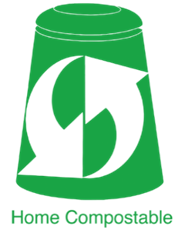
For now, the green compostable liners are the only items displaying the certified compostable logos that should go in your FOGO bin.
Please put all other certified compostable items in the red-lidded general waste bin. We hope to be able to accept these items in the FOGO bin in future following the State Governments Single Use Plastics Ban.
Our team makes sure to remove any invasive, self-seeding species. We do not include diseased or pest-ridden materials.
What happens to your recycling?
Your recycling is taken to the Resource Recovery Group’s Canning Vale Centre's Materials Recovery Facility, where they're separated, baled and sold for reprocessing into new products. Watch this video or attend a community tour.See some common recycling myths below.
Each year ~1,043,500 recycling bins are emptied in our City and taken to the Resource Recovery Group’s Canning Vale Centre. The machinery sorts hard rigid plastics, steel and aluminium, glass, paper and cardboard into bales, which are bought by businesses both on and offshore, who reprocess them into new products. See it for yourself – sign up to attend a community tour.
Bags could contain all sorts of contamination. Facility staff need to sort through up to 60 tonnes of waste an hour on a conveyor belt - they don't have the time to sort through bags (which could also be hazardous).
Plastics must be at least the size of your palm to go into the recycling bin. PAnything smaller goes into the red lidded general waste bin.
What happens to your general waste?
Your general waste bin taken to Veolia in Bibra Lake, before being sent to North Bannister Resource Recovery Park to be landfilled.
Remember, landfill is the last resort! It’s important that we all do our best to avoid and reduce waste in the first place. Check out our tips and tricks to reducing your waste.
Not true. Organics sent to landfill take a long time to breakdown, produce a harmful by-product called leachate (contaminating soil and groundwater) and releases greenhouse gasses (rather than capture it).
Composting requires the right balance of oxygen, water, nitrogen and carbon to decompose, which landfill cannot provide. Food and garden organics go into the lime-green lidded FOGO bin or your home compost.