
-
2011
-
Canning Bridge Precinct Vision
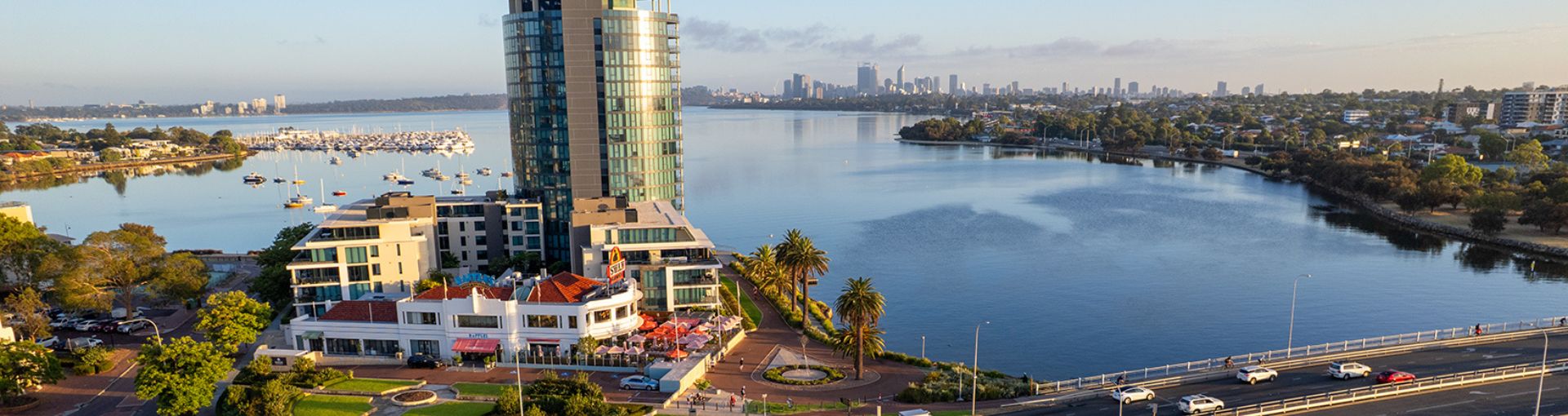
The Canning Bridge Activity Centre Plan (CBACP) is currently under review. This key planning document guides development in the area surrounding Canning Bridge Station, which is recognised as a designated Activity Centre. The precinct spans both sides of the Canning River.
Under the Plan’s vision, the Canning Bridge area will evolve into a unique, vibrant, and creative community centred on the integrated transport hub of the Canning Bridge rail station. It will be recognised for its distinctive location and mix of office, retail, residential, recreational and cultural uses. The precinct aims to create lively, pedestrian-friendly spaces that celebrate local heritage, connect with regional transport networks, and enhance the natural beauty of the Swan and Canning Rivers.
.jpg?language=en)
Canning Bridge Activity Centre Plan
First adopted in 2015, the CBACP was developed to support a vibrant, mixed-use precinct with opportunities for office, retail, residential, recreational, and cultural activity, making the most of its unique location as a transport hub.
The plan sets out the long-term vision for the area, outlining development goals, design guidelines for new buildings, and a framework for improving infrastructure and land use over time.
The CBACP is a joint initiative between the Western Australian Planning Commission, Department of Planning, City of Melville, City of South Perth, Department of Transport, Public Transport Authority, and Main Roads WA.
The review process
At the November 2019 Ordinary Meeting of Council, a report was presented by the Council Reference Group (CRG), an independent community group. Following this, Council resolved to begin a full review of the CBACP.
The review has provided an opportunity to reflect on what’s working well, what could be improved, and where updates may be needed, across areas such as building design, traffic and parking, public spaces, sustainability, and local character. It also ensures the plan continues to reflect community expectations and supports a high-quality, well-planned precinct for the future.
Through this process, the review has:
- Reassessed height controls and bonus height provisions, including how building heights transition between different zones.
- Listened to community and stakeholder feedback — from specific site considerations to broader precinct themes.
- Improved clarity and transparency in decision-making through updates to the plan and supporting documents.
The outcomes of this engagement have been summarised in the Canning Bridge Precinct and Place Report and are reflected in the proposed updates to the draft CBACP.
What is happening now?
At the August 2025 Ordinary Meeting of Council, Council resolved to note the Canning Bridge Activity Centre Plan: Community Benefit Framework Analysis – Feasibility Modelling Report, refer the report and community feedback to the Department of Planning, Lands and Heritage, and confirm its position not to support bonus building height above the base limits set in the Plan.
Ordinary Meeting of Council Minutes
You can stay up to date by clicking the ‘Follow Engagement’ at the top of this page.
Timeline
-
17 March 2015
-
Ordinary Meeting of Council
-
September 2019
-
Building height in the Canning Bridge Activity Centre engagement
WAPC endorsed a maximum bonus height for the periphery of the M10 zone to a maximum of five storeys
-
November 2019
-
Find a place at Canning Bridge Engagement
Community Development and Place Activation Plan
-
November 2019
-
Canning Bridge Road widening clause amendment engagement
Council has resolved to amend the clause and also adopt a local planning policy
-
19 November 2019
-
Council Motion
For the full review of the Canning Bridge Activity Plan
-
October 2020
-
Stakeholder roundtables
Coordinated by Hatch RobertsDay to build an understanding of specific issues and viewpoints
-
26 October - 17 November 2020
-
Community survey
-
17 November 2020
-
Community survey closes
-
Monday, 30 November 5.30 pm to 7.30 pm
-
Community, business + landowner workshop
Learn about the project objectives and share your perspectives, concerns and priorities
-
Wednesday, 2 December 5.30 pm to 7.30 pm
-
Community, business + landowner workshop
Learn about the project objectives and share your perspectives, concerns and priorities
-
12 January 2021
-
EOI for Place Design Forum opens
-
29 January 2021
-
EOI for Place Design Forum closes
-
5 February 2021
-
Place Design Forum selected
Successful participants for Place Design Forum notified
-
Monday, 22 February to Wednesday, 24 February 2021
-
3 Day Place Design Forum
Work alongside technical experts to review the Canning Bridge Activity Centre Plan
-
Wednesday, 24 February 2021
-
Open house
Community invited to open house 6.00pm to 8.00pm
-
28 June 2021 – 5 July 2021
-
Stakeholder Working Group workshop
Place Design Forum attendees and Focus Group members on the Precinct and Place Outcomes Report
-
9 July 2021
-
Draft of the revised Canning Bridge Activity Centre Plan circulated to Councillors
-
20 July 2021
-
Ordinary Meeting of Council
Resolution passed for additional information draft modification
-
11 July 2022
-
Ordinary Meeting of Council
Council resolved to invite public comment on both the revised Draft CBACP and the CRG Report
-
August 2022
-
Independent consultants Hatch RobertsDay worked on additional information sought by Council
-
29 August 2022
-
Public submissions open
Draft CBACP and CRG Report released for 60-day public comment period
-
8 September 2022
-
Information open day
7:00-8:30pm, Swan River Rowing Club
-
28 October 2022
-
Public submissions close
Statutory advertising period closes
-
26 October 2022
-
CABCP youth workshop
-
November 2022
-
Stakeholder Panel
Assessment period, including 3 x working sessions with the Stakeholder Representative Panel.
-
April 2023
-
Council considers CBACP modifications
Council considered CBACP table of modifications.
-
May 2023
-
Updated draft CBACP submitted to WAPC
-
5 September 2023
-
Department of Planning, Lands and Heritage requested further information from the City
-
27 February 2024
-
Special Meeting of Council to consider final submission
-
29 February 2024
-
The City responded to the Dept. of Planning, Lands and Heritage's request for further information
-
17 July 2024
-
New Further Information Request (FIR) from DPLH
Request for additional information relating to feasibility and relativity testing of the calculation
-
20 August 2024
-
Ordinary Meeting of Council
Council decision to appoint a consultant to respond to the FIR
-
10 December 2024
-
Ordinary Meeting of Council
Council endorses a scope of works for the FIR work
-
31 March 2025
-
Consultants appointed to complete FIR
-
31 March 2025
-
Further Information Request (FIR)
Consultants appointed to complete FIR
-
19 August 2025
-
Ordinary Meeting of Council
Council resolves to forward completed FIR report to WAPC
-
Mid 2026
-
Western Australia Planning Commission
Final decision expected from WAPC
FAQs about the CBACP
An Activity Centre Plan (ACP) is a guide for how an area will grow and change over time. It sets out a shared vision for what the place could look and feel like - where people can live, shop, work, relax, and connect.
It helps shape things like land use (for homes, shops, cafés, and community spaces), transport and parking, building design, and public spaces. The plan gives direction for future investment so the area can become a vibrant, welcoming, and well-connected hub for everyone.
The Canning Bridge Precinct Vision Statement guides the Canning Bridge Activity Centre Plan (CBACP).
‘The Canning Bridge area will evolve to become a unique, vibrant, creative community centred on the integrated transport node of the Canning Bridge rail station. The area will be recognised by its unique location, its integrated mix of office, retail, residential, recreational and cultural uses that create areas of excitement, the promotion of its local heritage and as a pedestrian friendly enclave that integrates with the regional transport networks while enhancing the natural attractions of the Swan and Canning Rivers’
Based on the feedback captured through the review process, it was recommended that the CBACP vision remain unchanged, however the goals have been revised to reflect local priorities more accurately.
The revised goals and principles are outlined on page 34-35 of the CBAC Precinct and Place Report.
The Local Planning Scheme 6 (LPS6) is the City’s main planning framework that guides how land across the whole City of Melville can be used and developed. It sets the broad rules for things like housing, business, transport, open space, and the environment.
The CBACP sits under the LPS6 and provides more detailed guidance for just one specific area, the Canning Bridge precinct. While the LPS looks at the big picture for the entire City, the CBACP focuses on the finer details of how this local area should grow, including building heights, land use, design, and public spaces.
Together, the LPS6 and the CBACP help shape the long-term vision for the City, ensuring development in Canning Bridge supports the wider goals of a connected, vibrant, and sustainable Melville.
The final decision on an Activity Centre Plan (ACP) is made by the Western Australian Planning Commission (WAPC).
The City of Melville works closely with the community and key stakeholders to prepare and review the plan. Once feedback has been considered and any changes made, the City presents the final version to the WAPC for approval.
The WAPC then reviews the plan to make sure it aligns with State planning policies and regional strategies before it becomes a formally approved planning document.
Community benefits are improvements or infrastructure that provide value to the community - for example, new public spaces, shared facilities, or upgrades to local amenities.
Development incentives give developers extra development potential (such as more building height) when their project delivers both community benefits and exemplary design. These incentives are sometimes referred to as:
- bonus provisions
- height bonuses
- development bonuses
For example, a developer may be allowed additional building height in exchange for creating high-quality public spaces.
Exemplary design means development that is high quality, inclusive, and incorporates innovative or outstanding features. It should set a positive example for future developments in the area.
Transitional areas are places where there is a change between the development potential of adjacent properties. For example changes in building height zones within the CBACP area and where the H4 zone (for buildings up to 4 storeys) is near single storey properties that are outside of the CBACP area.
Currently there are four zones
- M15: Mixed use zone with building up to 15 storeys with possibility of bonus height*
- M10: Mixed use zone with buildings up to 10 storeys with possibility of bonus height*
- H8: Residential up to 6-8 storeys
- H4: Residential up to 4 storeys
*In the M10 and M15 Zones, additional storeys can be awarded which show exemplary design and provide community benefits. Lots in the M10 zone which interface with the H4 and H8 zones are restricted to a maximum height bonus of 5 storeys.
This diagram shows the location of these heights within the City of Melville.
FAQs about the engagement
An extensive engagement process was undertaken to help prepare the updated Canning Bridge Activity Centre Plan (CBACP).
Engagement Stages
- Community survey (Nov 2020)
Gathered community views on the current CBACP, including expectations and ideas for potential future improvements. - Community, business and landowner workshops (Nov–Dec 2020)
Brought together community members, businesses and landowners to learn about the project and share perspectives, concerns and priorities. - Place design forum (22–24 Feb 2021)
A three-day forum run by Hatch RobertsDay to maximise stakeholder input through a collaborative planning and design process.- Built on earlier engagement outcomes.
- Served as the main way CBACP Review options were developed and refined.
- Involved the project team, City staff, Elected Members, and a stakeholder group selected via an Expression of Interest process to ensure a diversity of views.
- Open house (24 Feb 2021)
Invited the wider community to engage with participant after the Place Design Forum, ensuring the draft Precinct and Place Report reflected a balance of stakeholder views.
The outcomes of this engagement were captured in the Canning Bridge Precinct and Place Report.
Hatch RobertsDay is an independent planning and design consultancy appointed to lead the review, including coordinating the engagement with community and stakeholders, and prepare the updated draft Canning Bridge Activity Centre Plan (CBACP).
A 60-day public comment period on the draft CBACP ran from Monday, 29 August 2022 to Friday, 28 October 2022, inviting community submissions and feedback.
The consultation was supported through:
- An information open day on Thursday, 8 September 2022
- A youth workshop hosted by the Youth Affairs Council of WA for 16–25 year-olds on Wednesday, 26 October 2022
- Promotion across digital and traditional channels, including local newspapers, mail-outs, social media, a dedicated engagement webpage, and direct invitations to people previously involved in the project
The CBACP Stakeholder Panel also played a key role in reviewing issues, ideas and opportunities raised during this period, meeting for a series of three workshops in November 2022.
As part of the 60-day public submissions process, participants from the three-day CBACP Place design forum (ran by Hatch RobertsDay in February 2021) were invited to express interest in joining a CBACP Stakeholder Panel.
The Panel was established to:
- Take part in deliberative discussions on public submissions
- Assist Hatch RobertsDay in preparing final recommendations to the City of Melville
Member selection
Hatch RobertsDay selected panellists from the 2021 Place Design Forum cohort to ensure a broad and balanced range of views. This group had already been involved in detailed conversations that shaped the Canning Bridge Precinct and Place Report.
The Panel included:
- 17 representatives from the community, landowners and businesses
- 3 City of Melville staff
- 2 Ward Councillors attending as observers only
Workshops
The Stakeholder Panel worked closely with technical experts to help shape the final modifications to the draft Activity Centre Plan Review. The panel’s discussions focused on ensuring the process was fair, transparent, and consistent.
Sessions were held on the 2, 9 and 30 November 2022.
The Community Reference Group (CRG), an independent panel of community representatives formerly known as the Council Reference Group, prepared a report with recommendations on the draft Canning Bridge Activity Centre Plan (CBACP). At the November 2019 Ordinary Meeting of Council, Council resolved to release both the CRG’s report and recommendations, alongside the draft CBACP prepared by consultants Hatch RobertsDay, for public advertising and community feedback.
Contact us
If you require any further information, please contact us.
| Strategic Planning Team | Scott Kerr |
|---|---|
| Phone | 08 9364 0666 |
scott.kerr@melville.wa.gov.au |
Location

Was this page helpful?